Research
Extending Battery Lifespan Through Next-Generation Aqueous Zinc Batteries
2026.07.20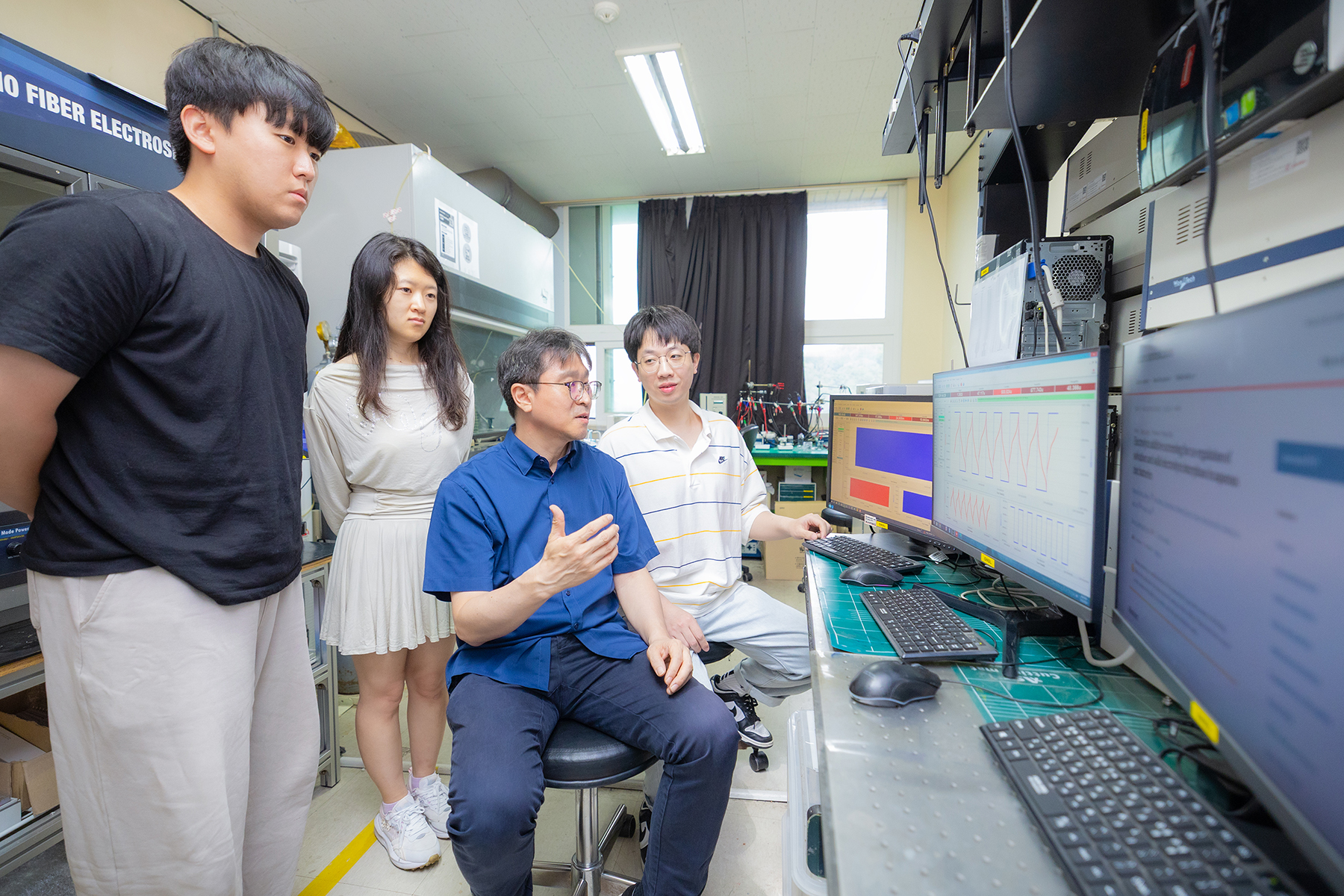
Professor Jae Su Yu’s research team at the School of Electronic Engineering, in collaboration with a research team from Yangzhou University, developed a dual-additive electrolyte engineering strategy to overcome the critical limitations of aqueous zinc metal batteries.
Professor Jae Su Yu’s research team at the School of Electronic Engineering develops a dual-additive electrolyte engineering strategy
The battery retains 93% of its initial capacity even after 800 charge-discharge cycles
Professor Jae Su Yu’s research team at the School of Electronic Engineering, in collaboration with Yangzhou University in China, has developed a dual-additive electrolyte engineering strategy to overcome the core limitations of aqueous zinc metal batteries. The team published their findings in the prestigious international journal Nature Communications (IF: 15.7).
Overcoming the LIfespan Flaw in Fire-Safe Next-Gen Batteries
Lithium-ion batteries, which power most smartphones and electric vehicles, pose fire risks due to their flammable organic electrolytes. In contrast, water-based aqueous zinc metal batteries offer a much safer and cost-effective alternative, making them a promising candidate for next-generation energy storage. However, repeated charge-discharge cycles trigger undesirable chemical side reactions and cause sharp zinc crystals (dendrites) to grow on the zinc anode. This rapidly degrades battery life, presenting a major hurdle for commercialization.Professor Yu’s team resolved this challenge by introducing a combination of two additives to the electrolyte: L-cysteine, a natural amino acid commonly used in food and cosmetics, and methyl propionate (MP), an organic compound. MP reconstructs the hydrogen-bonding network in the electrolyte, weakening the interaction between zinc ions and water molecules to facilitate smoother ion desolvation at the electrode surface. Concurrently, L-cysteine adsorbs preferentially onto the zinc anode, forming a protective layer rich in inorganic compounds–such as zinc nitride, zinc sulfide, and zinc oxide–that effectively suppresses side reactions and dendrite growth.
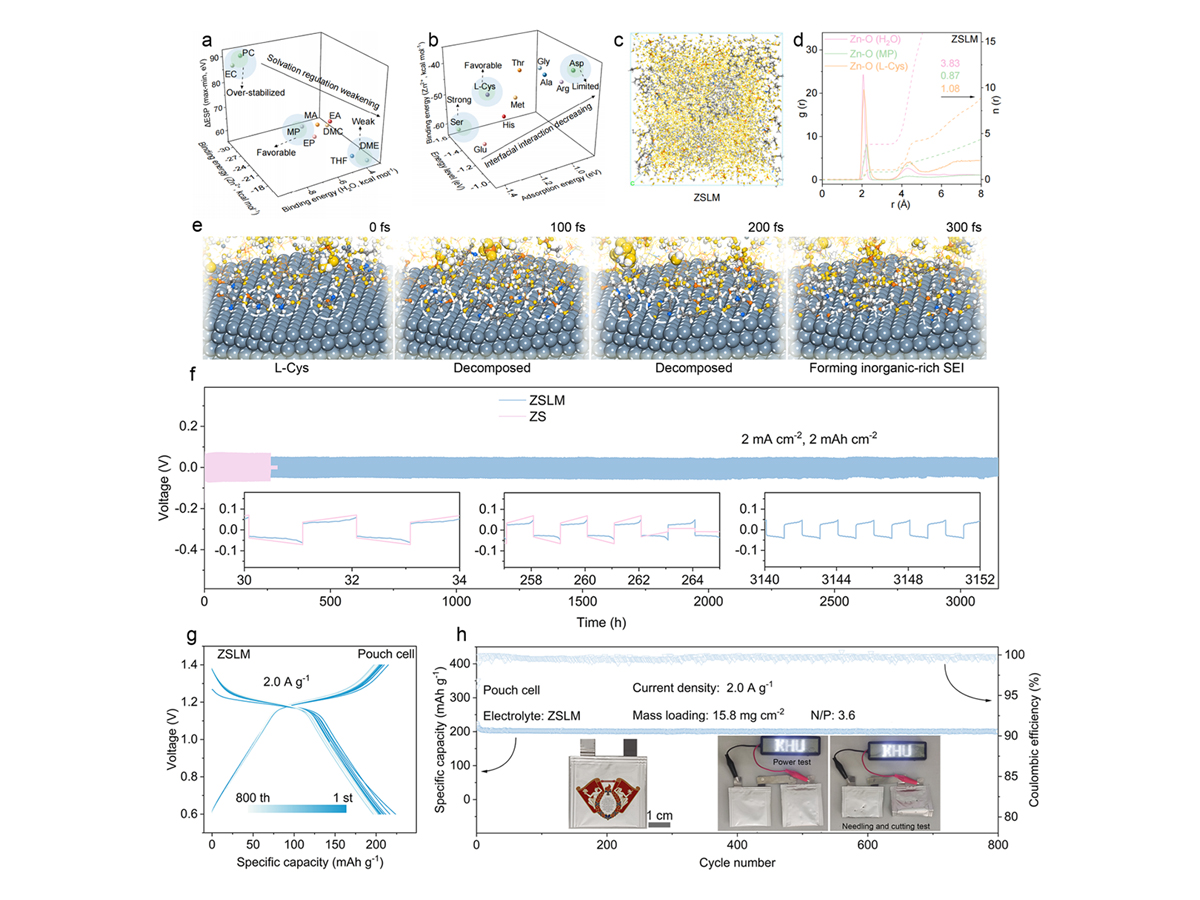
a. Screening of organic molecules based on binding energies with H2O, Zn2+, and ΔESP. b. Screening of amino acids based on adsorption energies, LUMO levels, and Zn2+ binding energies. c. ZSLM electrolyte model in MD simulations. d. RDF results. e. Snapshots of AIMD simulations. f. Galvanostatic cycling of Zn||Zn cells. g. Charge-discharge curves of Zn||I2 pouch cells. h. Cycling performance and Coulombic efficiency (CE).
Dual Additive Boosts Battery Life, Paving the Way for Commercialization
The results were impressive. The zinc symmetric cells operated stably for over 3,000 hours, and the zinc-iodine pouch cell maintained 93.1% of its initial capacity even after 800 charge-discharge cycles. Moreover, the battery continued to operate normally even under severe physical abuse—including bending, cutting, and needle-punching—proving its potential for wearable electronics and other demanding applications.Professor Yu stated, "We expect our additive screening methodology to serve as a versatile tool for developing various aqueous batteries. This work brings us one step closer to commercializing safe, long-lasting energy storage systems." The team conducted this research with support from the Ministry of Education’s Key Research Institutes Program for Science Engineering.
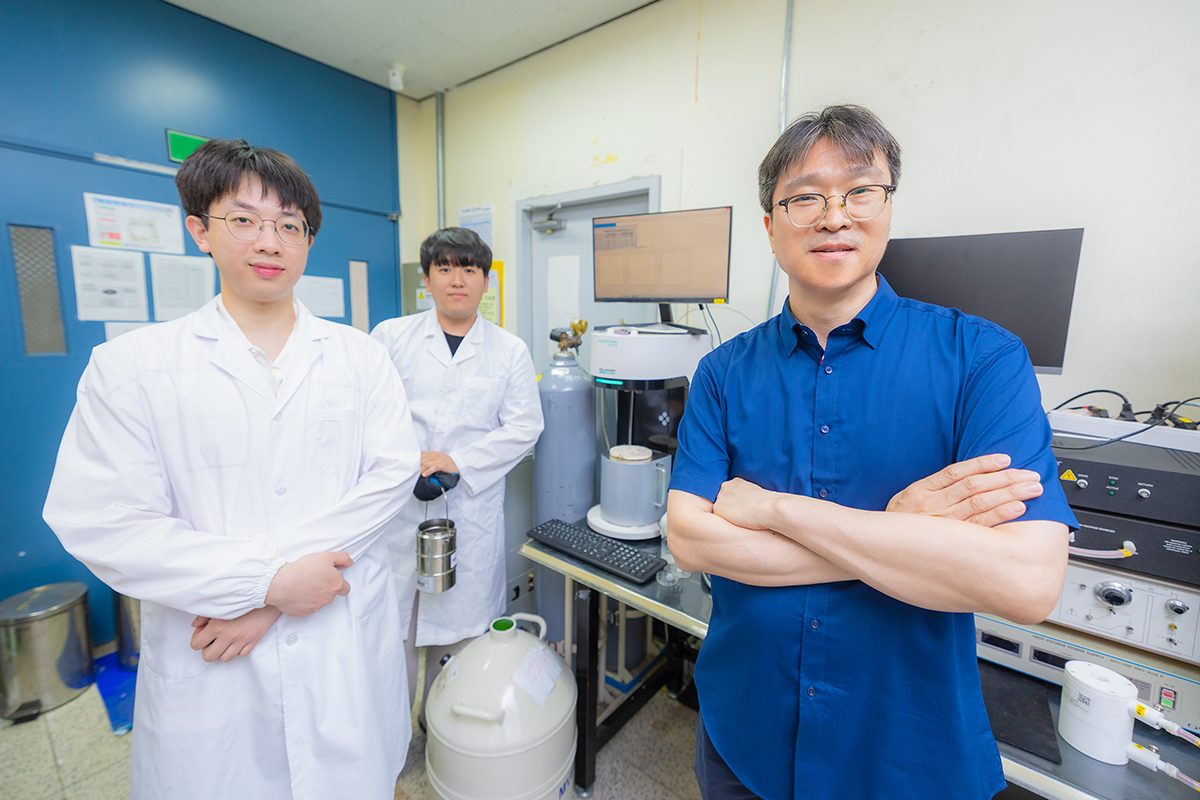
Professor Jae Su Yu highlights the significance of this research, stating that the team has moved a step closer to commercializing safe, long-lasting batteries.
- ⓒ경희대학교 커뮤니케이션센터 communication@khu.ac.kr