Research
Dean Seong-Gyu Ko’s Team at the College of Korean Medicine Publishes in Top Nature Portfolio Journal
2026.04.06
Identifying a New Signaling Axis for Non-Small Cell Lung Cancer Growth
Leveraging the College of Korean Medicine’s Leading Research Center Pipeline to Suggest Potential New Targets for Diagnosis and Treatment
A research team at the Center for Herb-based Cancer Research, led by Dean Seong-Gyu Ko of the College of Korean Medicine, has identified a new molecular mechanism—the GPR54-DDC axis—that supports the growth and survival of non-small cell lung cancer (NSCLC), the most common type of lung cancer. Through preclinical models, the team confirmed that the receptor protein GPR54 (KISS1R) promotes tumor growth by regulating the expression of Dopa Decarboxylase (DDC) and the energy metabolism of cancer cells.
The findings were published in Signal Transduction and Targeted Therapy (Impact Factor: 52.7), a prestigious journal within the Nature Portfolio. (Link to paper) This study is highly significant as it provides a unified explanation of how cancer cell signaling, energy metabolism, and tumor proliferation are interconnected through a single molecular axis.
Leveraging the College of Korean Medicine’s Leading Research Center Pipeline to Suggest Potential New Targets for Diagnosis and Treatment
A research team at the Center for Herb-based Cancer Research, led by Dean Seong-Gyu Ko of the College of Korean Medicine, has identified a new molecular mechanism—the GPR54-DDC axis—that supports the growth and survival of non-small cell lung cancer (NSCLC), the most common type of lung cancer. Through preclinical models, the team confirmed that the receptor protein GPR54 (KISS1R) promotes tumor growth by regulating the expression of Dopa Decarboxylase (DDC) and the energy metabolism of cancer cells.
The findings were published in Signal Transduction and Targeted Therapy (Impact Factor: 52.7), a prestigious journal within the Nature Portfolio. (Link to paper) This study is highly significant as it provides a unified explanation of how cancer cell signaling, energy metabolism, and tumor proliferation are interconnected through a single molecular axis.
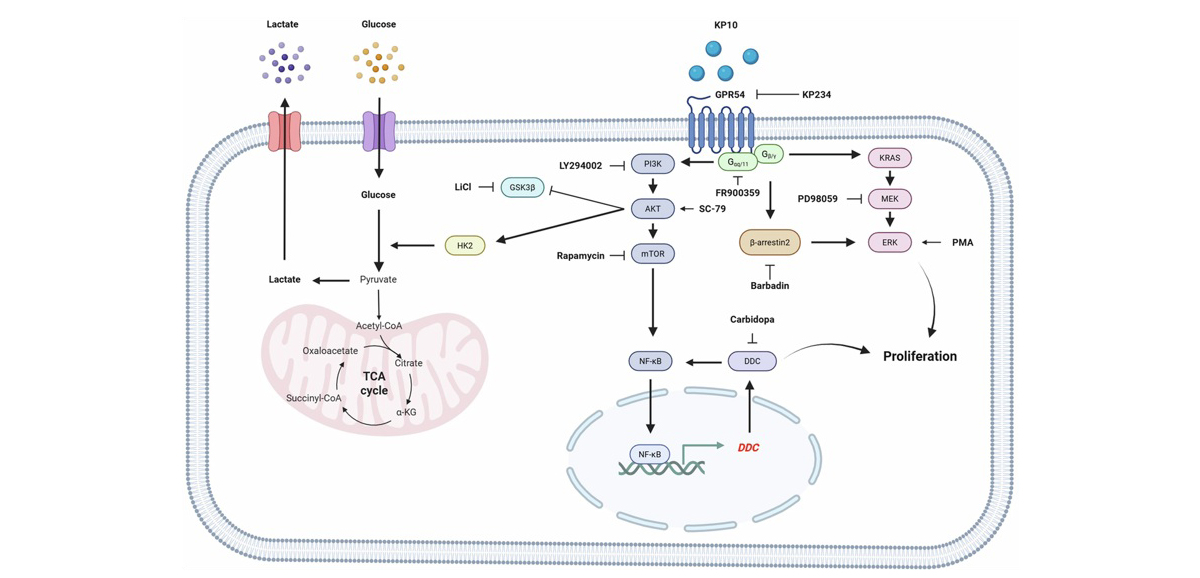
A schematic diagram illustrating how the GPR54-DDC signaling axis regulates the growth, survival, and metabolic reprogramming of non-small cell lung cancer cells.
The paper, titled “GPR54 regulates non-small cell lung cancer development via dopa decarboxylase,” was co-authored by Dr. Hyun-Ha Hwang and Dr. Seo Yeon Lee as co-first authors. Corresponding author Dean Seong-Gyu Ko remarked, “Publishing an original research paper in a top-tier journal is a first for Kyung Hee University’s College of Korean Medicine and a rare feat within the broader field of Korean medicine, making this achievement deeply meaningful.” This publication is particularly significant as it represents a flagship success for the Center for Herb-based Cancer Research. Dr. Hwang added, “When the acceptance was confirmed, it didn’t feel real at first. As the congratulations continue to pour in, I feel a great sense of responsibility alongside the joy.”
Discovery of a “New Switch” for Lung Cancer Cell Growth
Non-small cell lung cancer (NSCLC) accounts for approximately 85% of all lung cancer cases. To improve treatment outcomes, it is crucial to understand the fundamental mechanisms driving cancer cell growth and survival. In this study, the research team focused on a receptor protein called GPR54. The results confirmed that GPR54 and DDC act together as a signaling axis that drives both the growth and metabolic reprogramming of NSCLC.Using a Kras mutation-induced mouse model of NSCLC, the team observed that removing the GPR54 gene led to a decrease in the number of tumors and the size of lesions, while increasing cancer cell death (apoptosis) and extending survival periods. This indicates that GPR54 plays a vital role in the growth of NSCLC. These findings suggest clinically significant potential for future applications. Furthermore, analysis of public data revealed higher levels of GPR54 in tumor tissues, with a trend of poorer survival rates in groups with high GPR54 mRNA expression. DDC levels were also elevated in tumors and were reported to be linked to survival indicators.
Based on these findings, the team identified GPR54 and DDC as potential biomarkers for monitoring the status of NSCLC and as new therapeutic targets. Dean Ko remarked, “When starting treatment, lung cancer patients are primarily concerned with whether targeted therapies can be used. This study is significant because it presents a new mechanism that can be utilized regardless of a patient’s response to existing targeted therapies.”
A core researcher who led this achievement through unwavering focus and perseverance.Hyun-Ha Hwang
Dr. Hwang, who devoted himself day and night to this study for its publication, expressed deep gratitude to his advisor and lab members for their support in completing this research.
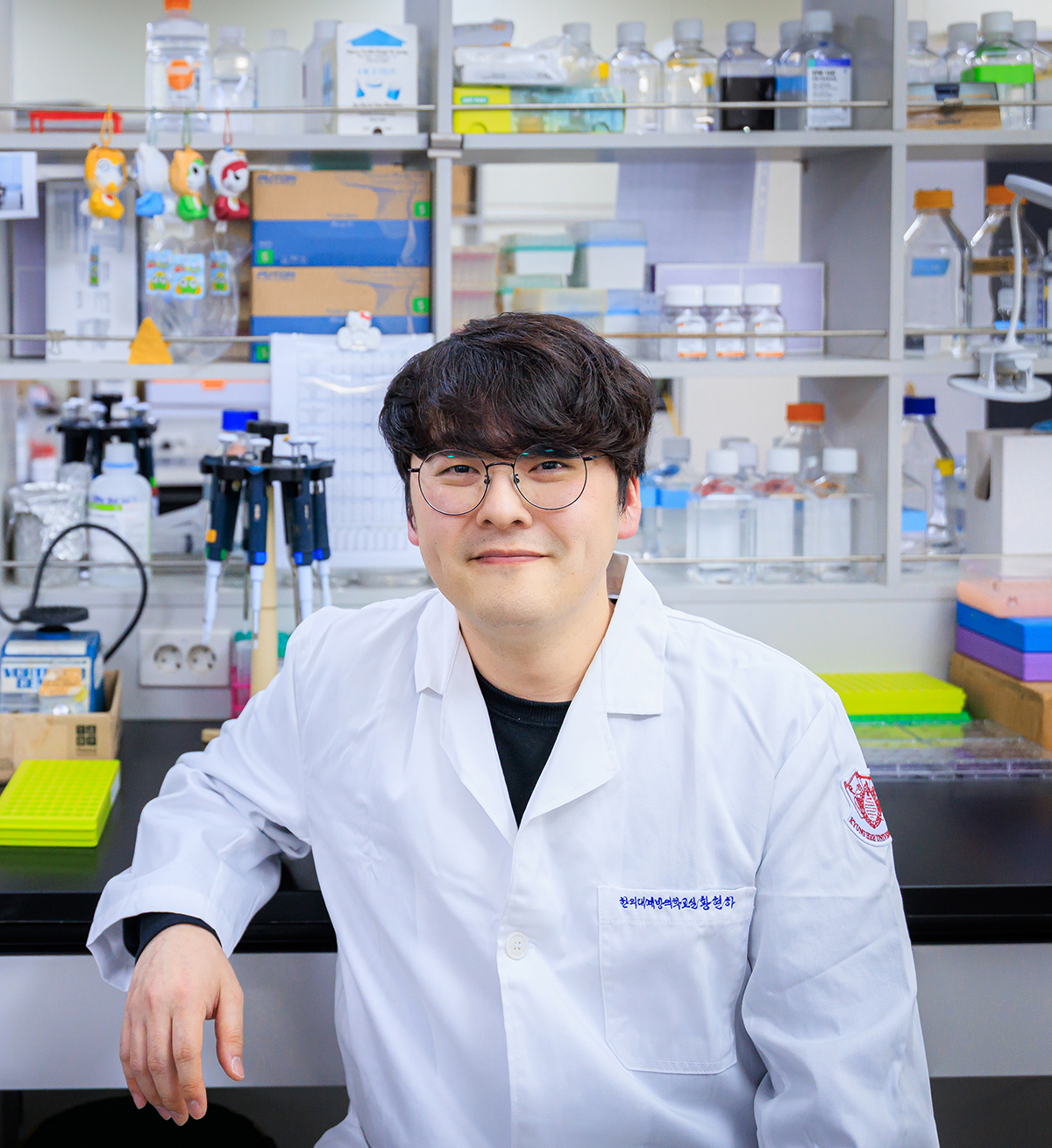
From Target Discovery to Publication in Top-Tier Journals
This achievement was not built overnight. According to Dean Ko, “Anticancer research based on herbal medicine, including SH003 (a complex formulation of Astragalus membranaceus, Angelica gigas, and Trichosanthes kirilowii), is a research pipeline that has been developed for over a decade.” While the team has historically accumulated research on breast and lung cancers, they are currently focusing their efforts on NSCLC. The motivation behind this specific study was a proactive goal: “Let’s directly identify the new targets and biomarkers through which our medications actually operate.” Rather than simply following established mechanisms, the team sought to discover original pathways where herbal-based research truly intersects with modern science.As a result, the team identified GPR54 as a novel target, which is closely linked to the SH003 anticancer substance research pipeline. “This paper is highly significant as it proposed a world-first pathway in the process of uncovering the principles behind how our developed medications work,” Dean Ko noted.
The publication process was equally demanding. Confident in the quality of their work, the team aimed for a prestigious journal. When the initial review came back with a request for a “Major Revision,” the team saw it as a sign of potential and dedicated themselves entirely to the supplemental work. Dr. Hyun-Ha Hwang played the central role during this phase. The four months spent preparing the revision were a true test of endurance; Dr. Hwang immersed himself in data supplementation, often working through the night with an average of only two hours of sleep.
“Dr. Hwang is a researcher with the tenacity to remain immersed in his work regardless of whether it is the weekend or the crack of dawn,” Dean Ko remarked, encouraging the team. “Even without a massive budget or a large research staff, we were able to achieve this result thanks to the visionary selection of a high-impact topic combined with the sheer persistence of our researchers.”
Dean Seong-Gyu Ko: Securing scientific evidence for herbal medicine through convergence research and building public trust.Dean Seong-Gyu Ko
Dean Ko emphasized the broader significance of this publication for the field, stating, “With the publication of this paper, we have proven that the College of Korean Medicine possesses the full capability to produce original research papers grounded in biology, biotechnology, and chemistry.”
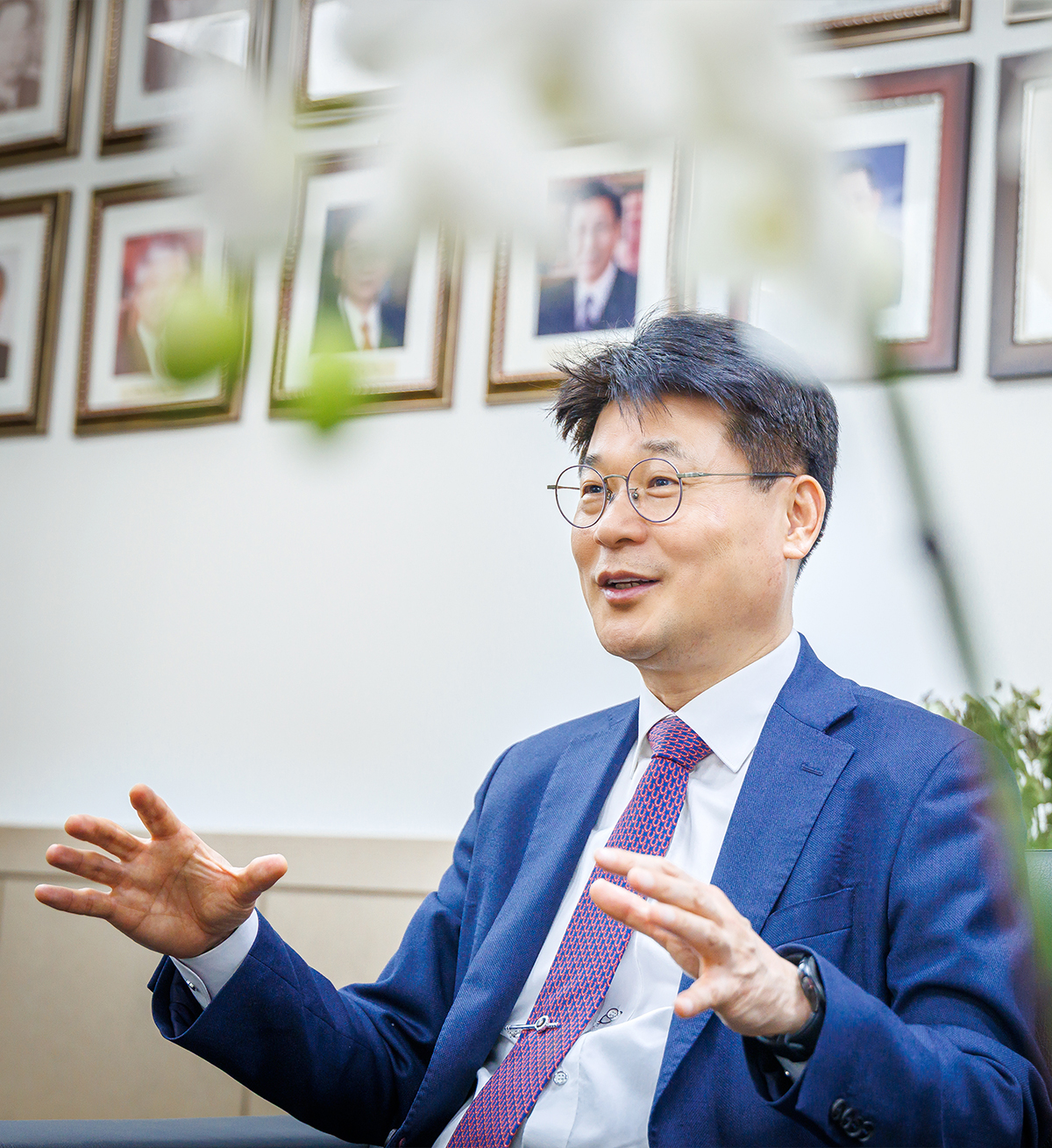
Expanding the Intersection of Korean Medicine and Biotechnology
The Center for Herb-based Cancer Research focuses on verifying the efficacy of herbal medicines using the language of modern biomedical science and systematically securing evidence for their mechanisms. Dean Ko noted, “Many cancer patients use Korean traditional medicine (KTM) in conjunction with surgery, chemotherapy, and radiation therapy.” He added, however, that data sufficiently explaining the evidence and operational mechanisms of herbal medicine is still lacking. “The center’s goal is to create highly reliable evidence for herbal medicines and expand the potential for collaboration with conventional Western medicine, helping the public choose KTM treatments with confidence,” he explained.The research team plans to continue follow-up studies centered on NSCLC. They will broadly investigate whether the GPR54-DDC axis can be developed into a viable therapeutic target, its potential for combination therapy with existing anticancer or immunotherapeutic drugs, and whether herbal medicines can be linked to the alleviation of cancer cachexia—a condition that worsens the systemic state of cancer patients.
In his closing remarks, Dean Ko offered words of encouragement to junior researchers and students: “I have come this far with the mindset of paving a single road in the wilderness. If I have laid one road, younger researchers will be able to widen it and eventually build a highway. I hope this achievement serves as a challenge to them, proving that ‘I can do it, too.”
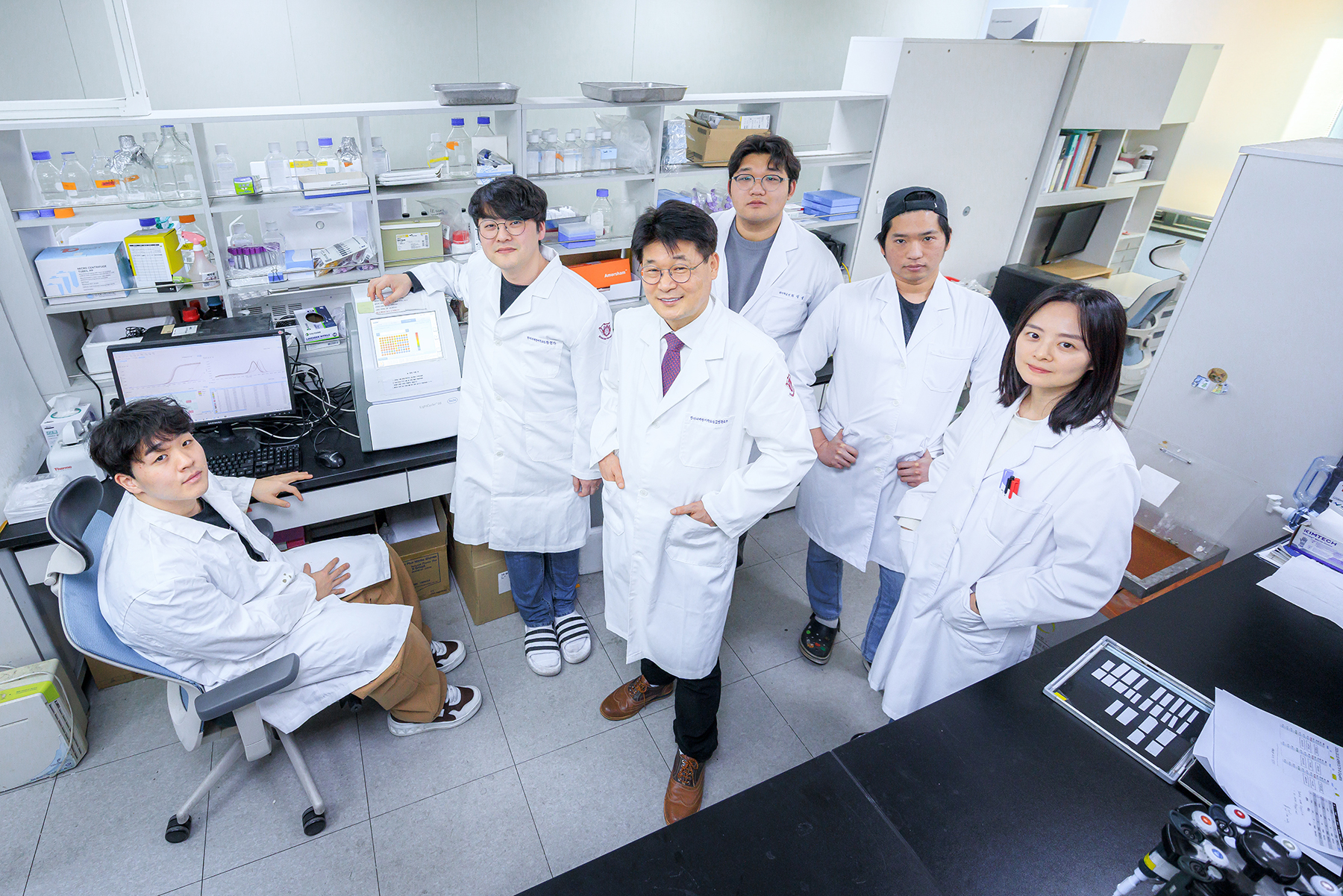
The research team’s goal is to establish the scientific evidence and mechanisms through which herbal medicine can improve the quality of life for cancer patients while creating synergy with targeted therapies and immunotherapy.
- ⓒ경희대학교 커뮤니케이션센터 communication@khu.ac.kr